
How these hotels were researched
▼- Rates: compared across more than one booking platform on the same day, quoted as a range with the month checked. Not a quote, and they move.
- Guest reviews in bulk: looking for complaints that repeat across many months, not single bad nights.
- Location: checked against a map, measured to the thing you actually came for.
- Real cost of entry: taxes, compulsory meal plans, transfers, and what is not included in the headline rate.
- What I could not confirm is said plainly in the text rather than filled in.
Ladakh rests on a trans-Himalayan plateau where Leh city sits at 3,500 metres above sea level. Arriving by flight from Delhi means ascending from sea level to high altitude in under two hours. The primary health rule in Ladakh is non-negotiable: 48 hours of total rest upon arrival.
Ignoring this acclimatisation rule and booking an immediate jeep tour to Khardung La (5,359 m) or Pangong Tso (4,225 m) risks severe acute mountain sickness (AMS) and hospitalisation at SNM Hospital in Leh.
Rates listed below were verified in July 2026 across major booking channels, reflecting brief summer operating months from May to October.
Nimmu House Ladakh
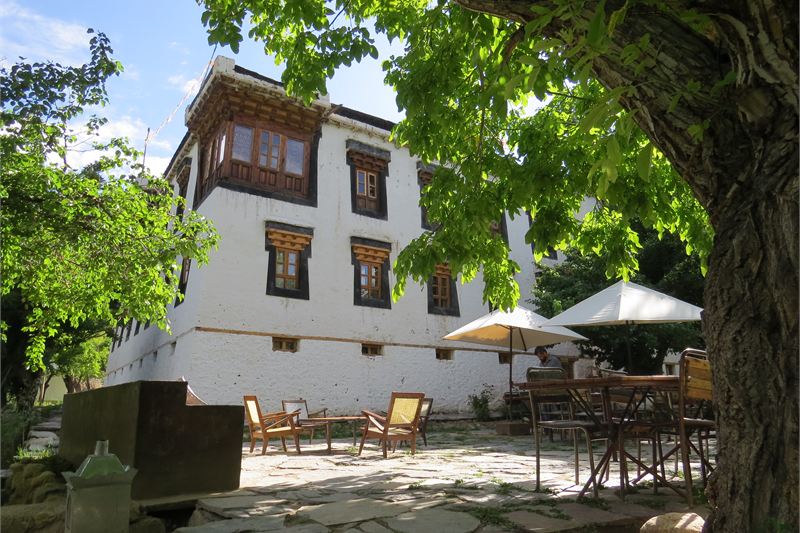
Built in 1910 for a cousin of the King of Ladakh, Nimmu House is a noble heritage house located in Nimmoo village at the confluence of the Indus and Zanskar rivers. The property sits at 3,100 metres altitude, slightly lower than Leh town.
The heritage estate features 4 restored palace rooms and 5 deluxe eco-tents set within working apricot orchards. Solar water heating, organic farm-to-table Ladakhi dining, and mud-brick architectural passive heating make it an exemplary sustainable property.
Indicative rates range from Rs 18,500 to Rs 42,000 per night on half-board meal plans. Lower altitude by 400 metres compared to Leh makes Nimmoo village a comfortable spot for acclimatising during your first two nights in Ladakh.
I could not confirm whether Nimmu House keeps its solar floor heating active through late October when night temperatures drop below freezing.
| Indicative rate | Rs 18,500 to Rs 42,000 per night |
|---|---|
| Rates checked | July 2026 |
| Location | Nimmoo village (3,100m altitude) |
| Best for | Restored heritage architecture, orchard gardens, and lower altitude acclimatisation |
In its favour
- Slightly lower altitude than Leh assists first-stage mountain acclimatisation
- Century-old Ladakhi noble stone house set in apricot and apple orchards
Worth knowing first
- Requires 45-minute taxi ride to reach Leh Main Bazaar shops and restaurants
- Eco-tents feature private bathrooms but canvas walls permit night chill
- Staying outside Leh on your first night works against acclimatisation, which should come first
Stok Heritage Village and Gompa Stays
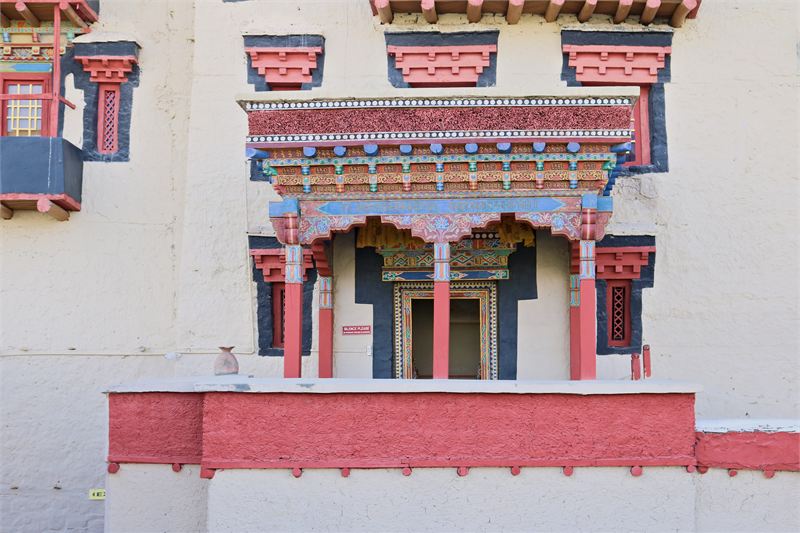
Stok village sits across the Indus valley facing Leh Palace, dominated by the 1820 Stok Palace where the ceremonial Royal Family of Ladakh resides. Part of the estate operates as a heritage hotel alongside local village homestays.
Staying in Stok offers views of 6,153-metre Stok Kangri peak and direct access to Stok Monastery. Heritage rooms feature carved timber pillars, painted thangkas, and low wooden seating tables.
Rates for palace heritage suites start from Rs 24,000 to Rs 55,000 per night, while village homestays run from Rs 3,500 to Rs 8,000. Water supply in high-altitude desert villages relies on snowmelt channels, making conservation essential.
| Indicative rate | Rs 3,500 to Rs 55,000 per night |
|---|---|
| Rates checked | July 2026 |
| Location | Stok Village (3,600m altitude) |
| Best for | Royal Ladakhi heritage, mountain views, and quiet village atmosphere |
In its favour
- Direct sightlines to the 6,153-meter Stok Kangri peak and Stok Gompa
- Atmospheric heritage architecture far from urban commercial noise
Worth knowing first
- Higher altitude (3,600m) demands complete rest on first arrival day
- Limited dining choices outside hotel and homestay dining rooms
- Power and hot water run to a schedule in the villages rather than being available on demand
Leh Main Bazaar Family Guesthouses
This is the mistake to skip: Rushing to Pangong Tso or Nubra Valley on Day 1. Tour operators in Delhi or online platforms often sell packages that drive travelers straight from Kushok Bakula Rimpoche Airport over 5,300-metre passes on their arrival morning. Doing this causes oxygen saturation drops, severe headaches, and vomiting.
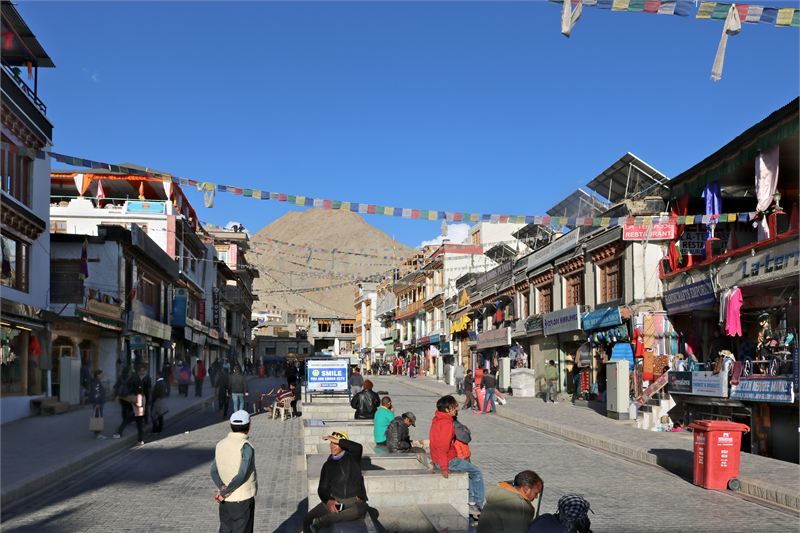
Instead, spend your first two days resting at a clean guesthouse along Fort Road or Changspa Road in Leh. Family-run guesthouses offer solar-heated water, garden seating, and home-cooked meals from Rs 2,800 to Rs 8,500.
You can stroll along paved pedestrian lanes of Main Bazaar, visit Leh Jama Masjid, drink sea buckthorn tea at Gesmo Restaurant, and let your body adapt to high-altitude air safely.
| Indicative rate | Rs 2,800 to Rs 8,500 per night |
|---|---|
| Rates checked | July 2026 |
| Location | Fort Road / Changspa Road, Leh |
| Best for | Walking access to bakeries, cafes, markets, and travel agencies |
What it costs to actually get there
Flight pricing to Leh (IXU) operates on extreme supply and demand curves. During the brief summer window from June to August, return flights from New Delhi can easily exceed Rs 25,000 if not booked months in advance. The airport transfer to central Leh costs a fixed union rate of roughly Rs 600 for the short 15-minute drive.
For those arriving by road via the Manali-Leh highway or the Srinagar-Leh highway, private SUV taxis charge between Rs 18,000 and Rs 25,000 for the multi-day crossing. These gruelling two-day drives help with gradual acclimatisation compared to flying, but the high transport costs balance out the cheaper room rates found outside the city.
When to go, and what changes
Ladakh’s tourist season is brutally short. From mid-May to September, the region is fully open, passes are clear of snow, and every guesthouse operates at full capacity. If you plan to visit Pangong Tso or Nubra Valley, this is the only reliable window.
From November to March, temperatures plummet to -15°C. Almost all mid-range hotels and guesthouses drain their plumbing to prevent pipes from bursting and shut down completely. A handful of premium hotels in Leh remain open for winter snow leopard trekkers, charging high rates for central heating and insulated comfort in an otherwise frozen desert.
Planning high altitude Ladakh travel
Spend Day 1 strictly sleeping and resting in your room. Use Day 2 for short, gentle walks around Leh Main Bazaar or Shanti Stupa. Begin inner-line permit drives to Nubra Valley, Turtuk, or Pangong Tso only from Day 3 onward.
Comparing mountain region stays across India? Explore our Himachal hill station hotels guide or examine economical travel options in our Budget hostels in India review.
Practical Ladakh travel notes
- Protected Area Permits (PAP) or Inner Line Permits are required for domestic and foreign travelers visiting Nubra, Pangong, Tso Moriri, and Dah Hanu. Apply online or via Leh travel agents.
- Kushok Bakula Rimpoche Airport (IXU) in Leh is a military airbase. Hand luggage rules are strictly enforced and power banks must be packed in check-in luggage.
- Hydration is vital in high-altitude desert air. Drink 3 to 4 litres of water daily. Consult a doctor regarding Diamox (Acetazolamide) for mountain sickness prevention.
- Plastic water bottles are discouraged across Ladakh. Carry a refillable insulated flask; cafes and hotels provide filtered water refill stations for a small fee.